Issue 81: Fact-Check Friday: Introjection Revisited
When the voice in my head isn't mine...and I don't mind.

In This Issue
Recent Issues
Fact-Check Friday: Introjection Revisited
Updates:
Burying the Lede: Marsh Press Etsy Store!
On the Serial Memoir: Wrong
Recent Issues
Terminology Tuesday: Introjection
In this issue, Terminology Tuesday explores how we unconsciously carry around the voices, rules, and judgments of people who once had power over us—parents, bosses, partners, and other authority figures. These “ghost voices” can still trigger fear, guilt, or self-doubt long after the original relationship has ended, often without us realizing it. The good news is that once we learn to recognize whose voice we’re hearing, we can fact-check those old messages, reconnect with our own values, and start reclaiming the map of our own lives.Fact-Check Friday: The Nonjudgmental Thing
This week's Fact-Check Friday is about the nonjudgmental thing—you know, the mindfulness concept that sounds simple until you actually try to do it. Turns out I had it misattributed. The exhaustion most of us feel isn't really a nonjudgmental problem. It's a negativity bias problem. We get into what that actually means, where it comes from, and what a brain trained by parentification, caregiving, or addiction recovery does with it.
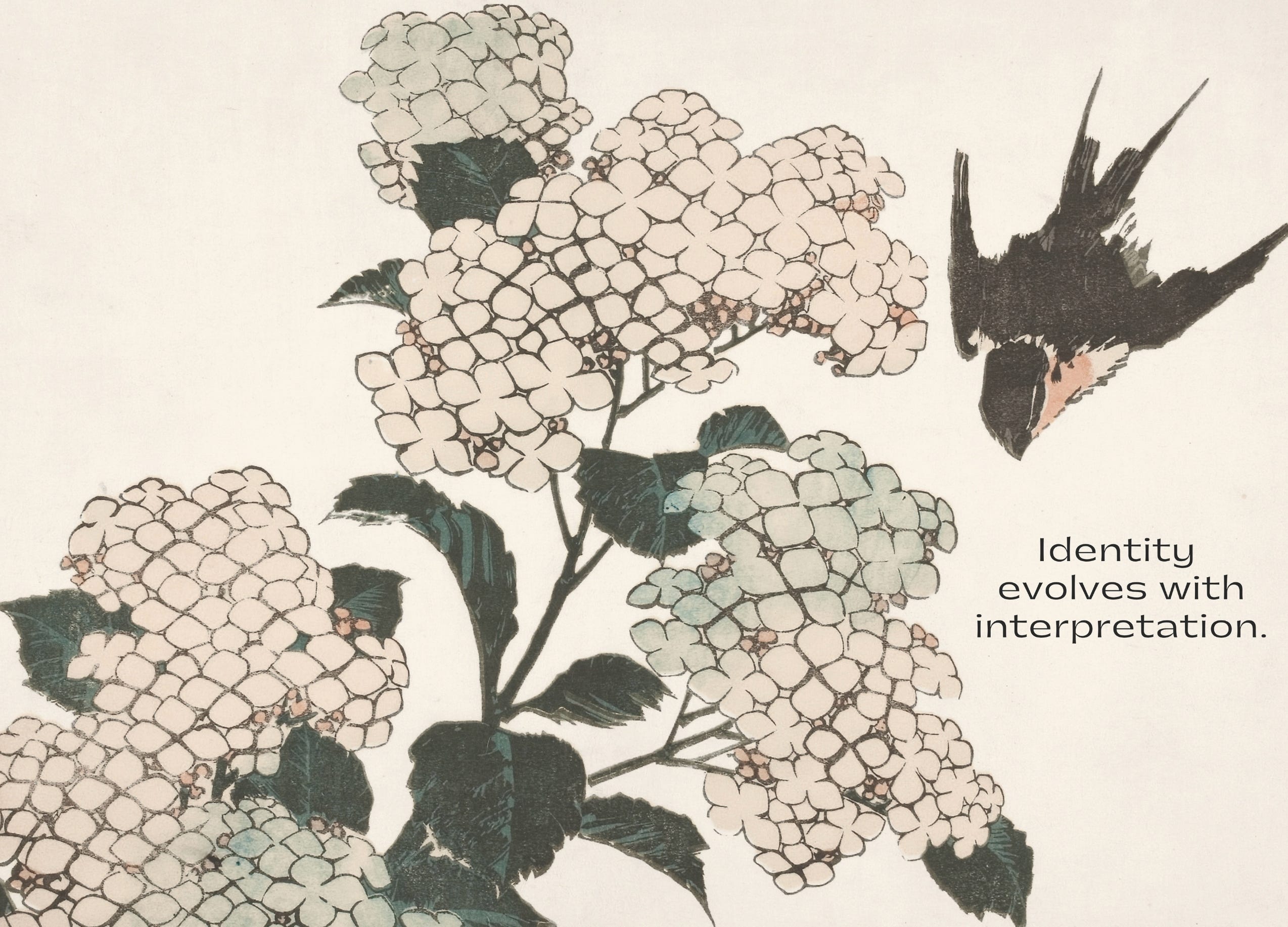
Introjection Revisited
We’re going to make this one short due to the holiday weekend. It’s Friday, tomorrow’s the Fourth, and I’m about to put down the laptop. But I did want to fact-check myself in that I didn’t even think to offer a counterpoint to Tuesday’s discussion of introjection. Because of my own lens, I was only thinking of threats. But guess what? There’s more to it. We have good voices in our heads that aren’t ours. And that’s important to remember.
On Tuesday, I focused on the ghost voices—the ones that sound exactly like the people who shaped, shamed, controlled, or limited us. The ones that still show up in our heads long after the person has left the room. The ones that make us react out of character, question our own judgment, and confuse someone else’s rules for reality.
That part is real. But it isn’t the whole story.
If introjection is the process of taking in someone else’s beliefs, rules, attitudes, and judgments until they become part of our internal world, then we don’t only take in the harmful ones. We also absorb care. We absorb steadiness. We absorb kindness. Some of the voices that live in our heads now are there because someone, at some point, showed up for us in a way we needed—and our brains remembered.
A lot of us can probably hear someone kind in our heads if we stop and listen. Maybe it’s a therapist telling us to slow down. Maybe it’s a sponsor saying we don’t have to do this perfectly. Maybe it’s a friend who reminded us that rest isn’t laziness, or someone who once told us the truth so clearly and gently that their tone still shows up when we need it. Those voices may not have started as ours, but they can still help steady us.
This is where it helps to distinguish between two different things: introjection and healthy internalization. Introjection tends to happen unconsciously, often under pressure, fear, dependency, or the need to belong. We take something in because there is some emotional cost to not taking it in. Healthy internalization is different. That’s when we consciously engage with a belief or value, test it against our own experience, and keep it because it genuinely fits who we are and how we want to live.
So yes, we may hear positive voices in our heads that didn’t originate with us. The deeper question is whether they still feel borrowed, or whether they have become integrated. A therapist’s phrase might begin as borrowed language and later become our own inner steadiness. A sponsor’s wisdom might start outside us and then become something we live by because it matches our actual values.
That’s probably the simplest fact-check here: not every voice that came from outside us is a problem. Some are ghosts. Some are guides.
Updates
Burying the Lede: A Marsh Press Etsy Store!
I have been working around the clock to add a Marsh Press Etsy store, likely to also extend to Teachers Pay Teachers and perhaps Faire. We’ll see. Between publishing work, writing, and taking care of my dad, I have been whirling like a dervish with this new artwork leg of the portfolio-career stool. And I’ve been loving it. I’ve always been involved with art and design, but now I’m marrying my words with art and design with a basis in what we talk about here. Sure, some of it is just stuff that I like and hope others like, too, but a lot of it is editorial content and themes that have been pulled from my writing. I’m chuffed.
Some of what’s been so challenging has been the operational learning curve. Okay, I understand Etsy. I understand Adobe products, buying stock art, licensing, and making art. I understand (now) how to avoid some of the AI schlock. I understand Canva and how to make videos. I’ve got decades of spreadsheet and tracking experience. But when we get into making all the different types of files needed to sell digital downloads, mockups, download instructions, online file storage, and SaaS integration, as well as setting up products in a print on demand (POD) site like Gelato, I had me some learning to do. Considering how much I love soaking in problem-solving, it’s been fun. And I’m excited to finally show it off.
The idea is that we need more of this type of messaging around us. In our homes, schools, treatment centers and clinics, meeting spaces, and community spaces. It can be sized to print on a school or workplace printer or sent to a print on demand vendor. And, as I get them set up in Gelato, more and more will be available to get printed and delivered seamlessly. Because, my goodness, recovery and mental health artwork is lacking, especially what can be applied broadly…like remapping neural pathways. Annnnnd…there we have it. Full circle. Enough ellipses and words.
I’ll be adding more over the weekend, I’m sure, and making more of the products either digital or print. Here’s a 25% off discount for anything you want to buy between now and Monday as a thank you for reading. Use the promo code REMAPPINGFAN
Here’s the link to the Etsy store that will automatically apply the discount:
https://marshpress.etsy.com?coupon=REMAPPINGFAN
As always, thank you.
On the Serial Memoir: Wrong
This installment of my serial memoir, Fat & Drunk, explores the paralyzing obsession of disordered eating and the deep-seated belief that I am fundamentally wrong. It captures the frantic, secretive compulsion of a binge—chasing a temporary relief that serves as the perfect psychological prelude to my history with alcohol.
Start at the beginning: The prologue to Fat & Drunk.